
Comparing Lennox vs. Trane HVAC in Palm Desert, CA? For most Palm Desert homes, Trane stands out for durability and reliable performance in extreme heat, while Lennox excels in peak efficiency and quiet operation. The right choice depends on your priorities, but installation quality matters more than the brand itself. Our team focuses on sizing, ductwork, and setup to ensure your system delivers comfort and efficiency.
This guide explains how Lennox and Trane compare on efficiency, features, value, warranty, and reliability, with a focus on what matters most for our desert climate.
Key Differences Between Lennox and Trane
Lennox and Trane are both American manufacturers with more than a century of history. Lennox started in Marshalltown, Iowa, in 1895. Trane began in La Crosse, Wisconsin, in 1885. Each brand makes central air conditioners, heat pumps, furnaces, air handlers, and indoor air quality products.
The biggest differences come down to design priorities:
Lennox pushes the limits of efficiency and quiet operation. Its top Signature Collection units are built around variable-capacity compressors and connected thermostats.
Trane focuses on toughness. The brand is known for heavy-duty cabinets, its all-aluminum Spine Fin coil, and compressors designed to handle long run times.
Parts and service differ too. Lennox uses more proprietary components, which can tie repairs to a Lennox dealer. Trane parts are shared across its family of brands, which can make them easier to source.
Trane Technologies, the company behind Trane, also makes American Standard and Ameristar equipment. Trane and American Standard systems share much of their engineering and many of their components. We are an authorized dealer for American Standard and Ameristar, so homeowners who like Trane’s build quality have a closely related option through our team. Our Ameristar vs. American Standard comparison explains how those two lines differ.
Energy Efficiency and Performance
Efficiency decides how much electricity your system uses to keep your home cool. In Palm Desert, where summer temperatures stay high for months, that number has a real effect on your monthly energy use. Our article on HVAC efficiency explains these ratings in more detail.
Unit Efficiency Ratings
Air conditioners and heat pumps are rated with SEER2, which measures cooling efficiency across a season. Heat pumps also carry an HSPF2 rating for heating. A higher number means the system uses less energy to do the same work.
Lennox has built its reputation on the high end of this scale. Its top variable-capacity air conditioners have posted some of the highest SEER ratings among central systems sold in the United States. If squeezing out every bit of efficiency is your main goal, Lennox’s flagship models are hard to match.
Trane’s top XV series units are also highly efficient. They usually sit a little below Lennox’s peak models on paper. Across mid-range and entry-level systems, the two brands are much closer, and the gap often disappears.
A few points to keep in mind:
The rating on the label assumes correct sizing, correct refrigerant charge, and good airflow. A poor installation can erase much of the difference between brands.
Very high SEER2 ratings come from variable-speed equipment. These systems run longer at low speed rather than cycling on and off at full power.
In extreme heat, a system’s performance at high outdoor temperatures matters as much as its seasonal rating. Our post on HVAC energy use in the valley covers this topic.
Comfort and Humidity Control
Comfort is about more than reaching a set temperature. It also includes even temperatures from room to room, steady airflow, and humidity control.
Both brands offer three main compressor types:
Single-stage systems run at full power or not at all. They are simple and dependable but can create bigger temperature swings.
Two-stage systems have a low setting for mild days and a high setting for peak heat.
Variable-speed systems adjust in small steps. They hold temperatures within a narrow range and run more quietly.
Lennox offers Humiditrol, a whole-home dehumidification feature that works with its systems. Trane’s variable-speed units handle moisture well by running longer at lower speeds, which pulls more water from the air.
In the desert, dry air is the norm for most of the year. Humidity control still matters during monsoon season, when muggy days can make a home feel clammy even at a cool temperature. A variable-speed system from either brand handles those days well.
Features and Specifications
Here is how the two brands compare on the features homeowners ask about most.
Smart controls. Lennox’s S40 smart thermostat works with its communicating systems. It can adjust the system based on usage and send maintenance alerts. Trane’s ComfortLink II communicating system and its smart thermostats offer similar control and system monitoring. Both brands work with their own thermostats when you buy a top-tier communicating system. For more on this topic, see our page on smart thermostats.
Noise levels. Lennox’s top units are among the quietest outdoor condensers available. Trane’s variable-speed units are also quiet, though many homeowners notice a small difference in favor of Lennox at the top end.
Coil design. Trane’s Spine Fin coil is made entirely of aluminum. This design resists the corrosion that can affect copper and aluminum coils over time. Lennox uses its own coil designs with corrosion protection on many models.
Compressors. Trane’s Climatuff compressors have a long track record in tough conditions. Lennox uses high-quality compressors as well, including variable-capacity designs in its Signature line.
Indoor air quality. Lennox offers its PureAir system and a range of filters and purifiers. Trane offers CleanEffects air cleaners and other filtration upgrades. Both work well for homes dealing with desert dust and pollen.
Heat pump options. Both brands make heat pumps that handle mild desert winters with ease. If you are deciding between a heat pump and a gas furnace, our guide to heat pump vs. furnace systems can help.
Value Comparison
Both brands sit in the upper part of the residential HVAC market. Each one also sells several product tiers, so the right choice depends on the features you need rather than the brand alone.
Lennox vs. Trane Cost in Palm Desert
The cost of a new central AC system in Palm Desert, CA averages $7,500 to $15,000 installed. Where a project lands depends more on the tier, the size of the home, and how much of the system you replace than on the brand name. Typical equipment prices before labor look like this:
Entry level (Lennox Merit, Trane XR): about $3,000 to $5,000.
Mid range (Lennox Elite, Trane XR15 and XL): about $6,000 to $8,000.
Top tier (Lennox Signature, Trane XV): about $7,000 to $10,000.
Labor, permits, and Title 24 duct testing make up the rest of the installed price, and replacing the ductwork as well can push a project past $20,000. Trane’s sister brands often cost less for similar build quality, as our American Standard and Ameristar price comparison shows.
Equipment Tiers
Lennox organizes its equipment into three lines:
Merit Series: dependable, entry-level systems with single-stage operation.
Elite Series: mid-range systems, many with two-stage operation.
Signature Collection: top-tier, variable-capacity systems with the highest efficiency and quietest performance.
Trane uses a similar structure:
XR Series: entry-level systems built for reliability.
XL Series: mid-range systems with more efficiency and comfort features.
XV Series: top-tier, variable-speed systems.
Comparing like-for-like tiers gives you a fair picture. A Lennox Signature unit should be weighed against a Trane XV unit, not against an XR.
Installation Factors
The scope of installation varies far more from home to home than the equipment does. Factors that shape the project include:
The size and layout of your home.
The age and condition of your ductwork.
Whether you are replacing a full system or just the outdoor unit.
Electrical work, such as upgrades for a heat pump.
California’s Title 24, which sets rules for equipment replacements and duct testing.
When you compare proposals, look at what each one includes. Our guide on how to read AC proposals walks through the details to check.
Long-Term Value
Long-term value comes from three things: efficiency, lifespan, and service.
A high-efficiency Lennox system uses less electricity each year, which adds up over a long cooling season. A Trane system may use slightly more energy at the top tier, but its reputation for durability can mean fewer repairs over time.
Service access also affects value. Because Lennox relies more on proprietary parts, repairs may depend on a Lennox dealer. Trane parts are shared across Trane Technologies brands, which can make service more flexible. Homeowners who plan to stay in their home for many years should weigh these points alongside efficiency ratings.
Warranty and Reliability
Warranty Coverage
Both Lennox and Trane offer limited parts warranties on their residential equipment. In most cases, the standard coverage is 10 years on parts when the unit is registered within the required time after installation. Some top-tier models carry added coverage on the compressor.
Key points to keep in mind:
Registration matters. If the system is not registered on time, coverage can drop to a shorter period.
Parts warranties often do not cover labor. Labor coverage usually comes from the installing company.
Terms change by model and tier, so always read the warranty that applies to your specific unit.
Reliability and 10-Year Ownership Experience
Trane’s long-standing slogan, “It’s Hard to Stop a Trane,” reflects its focus on durability. Many technicians point to Trane’s heavy cabinets, Spine Fin coils, and proven compressors as reasons these systems hold up under tough conditions. That matters here, where summer heat pushes an air conditioner hard for months at a time.
Lennox systems are also reliable, especially in the Merit and Elite lines. Its top variable-capacity models contain more advanced electronics. These parts deliver excellent comfort but can be more complex to diagnose and repair over a 10-year span.
Over a decade of ownership, a few things shape reliability more than the brand:
Correct sizing keeps the system from short cycling or running nonstop.
Clean coils and filters help the unit move heat efficiently in desert dust.
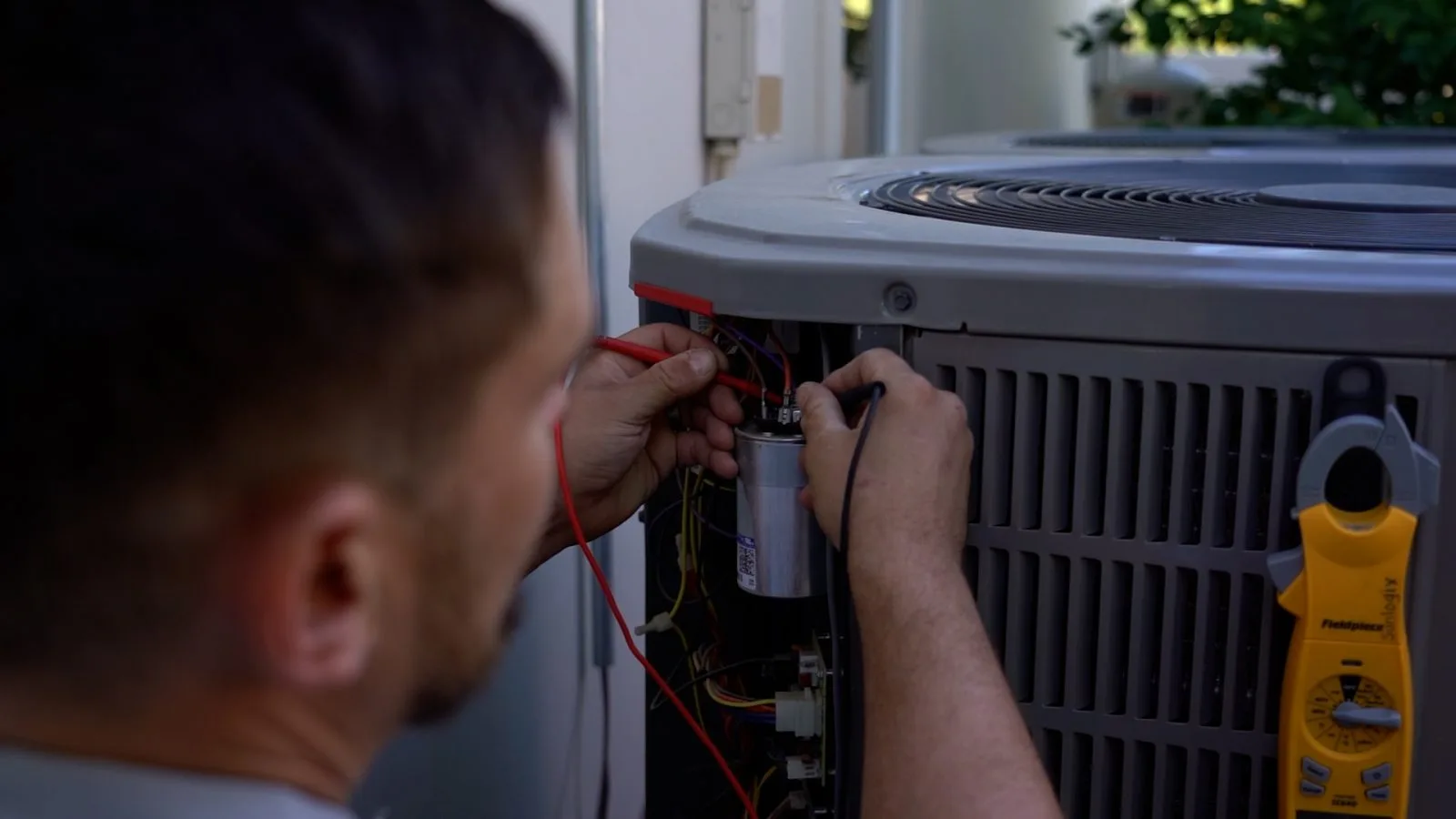
Regular maintenance catches small issues, such as worn capacitors or low refrigerant, before they lead to a breakdown.
A seasonal check after the summer helps any system, whether it carries a Lennox, Trane, or American Standard badge.
Customer Satisfaction and Reviews
Homeowners tend to praise both brands, though for different reasons.
Lennox owners often mention how quiet their systems are and how even the temperatures feel. Smart-home fans like the connected thermostat and app control. Some reviews raise concerns about repair complexity and part availability on high-end models.
Trane owners often mention how long their systems last and how well they handle extreme heat. Many describe their units running for years with only routine maintenance. Some note that Trane’s top models are not quite as quiet as Lennox’s flagship units.
The most common theme in negative reviews for both brands is not the equipment. It is the installation. Poor sizing, leaky ducts, and incorrect refrigerant charge cause many of the problems homeowners report. That is why reviews of the installing company deserve as much attention as reviews of the brand.
Installation Quality and Considerations
A well-installed mid-range system will often outperform a poorly installed top-tier system. That is true for Lennox, Trane, and every other brand.
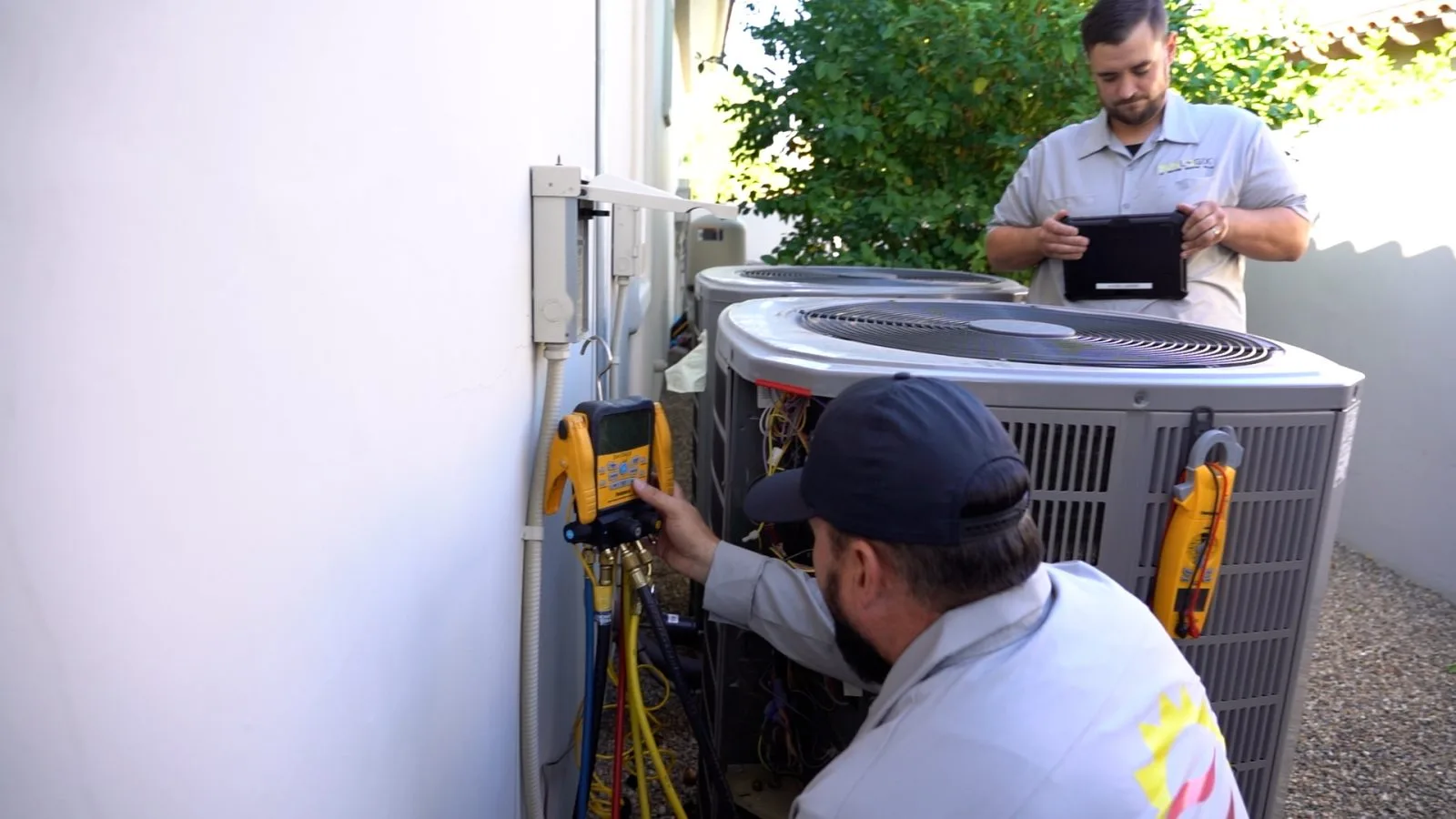
A proper installation should include:
A load calculation. This measures how much cooling and heating your home actually needs based on its size, insulation, windows, and sun exposure.
A ductwork review. Leaky or undersized ducts waste energy and reduce comfort.
Correct refrigerant charge. Too much or too little refrigerant lowers efficiency and strains the compressor.
Airflow testing. The indoor blower must move the right amount of air across the coil.
System registration. This protects the full manufacturer warranty.
Desert homes add a few more considerations. Outdoor units need room to breathe and benefit from shade where possible. Attic ductwork needs good sealing and insulation because attic temperatures climb very high in summer. Some homes also benefit from zoning or a ductless system for rooms that are hard to cool.
You can see examples of HVAC projects our team has completed on our case studies page.
Final Recommendation: Which Brand Should You Choose?
The answer to “Lennox vs. Trane: Which HVAC Brand Is Best for Your Home?” depends on what you value most.
Choose Lennox if:
Peak efficiency is your top goal.
You want one of the quietest outdoor units available.
You value advanced smart-home features and app control.
Choose Trane if:
Long-term durability is your top goal.
You want proven equipment that handles extreme heat well.
You prefer wider parts availability and more flexible service options.
For many Palm Desert homeowners, durability and heat tolerance carry a lot of weight. A system that runs hard for most of the year needs a tough compressor and a corrosion-resistant coil. That is one reason Trane’s design approach appeals to so many people in our area.
It is also why we install American Standard and Ameristar equipment. These brands come from the same parent company as Trane and share much of its engineering. Our team can walk you through how each tier fits your home, your comfort goals, and your energy use.
Conclusion
Choosing between Lennox and Trane comes down to your priorities. Lennox leads on top-end efficiency, quiet operation, and smart features. Trane leads on durability, heat tolerance, and easier parts access. Both offer similar warranty coverage when systems are registered on time. In our desert climate, correct sizing and careful installation matter more than the logo on the unit, and Trane’s sister brands, American Standard and Ameristar, give homeowners a closely related option through our team.