The cost of solar panels in Palm Desert, CA, depends on system size, roof conditions, equipment choices, available incentives, and financing options, so each property receives a unique quote. As a general range, homeowners can expect a typical solar installation in Palm Desert to cost $15,000–$35,000 before incentives, depending on the system’s specifications. We offer a free estimate to help you get a personalized starting point and a direct path to lower long-term energy expenses.
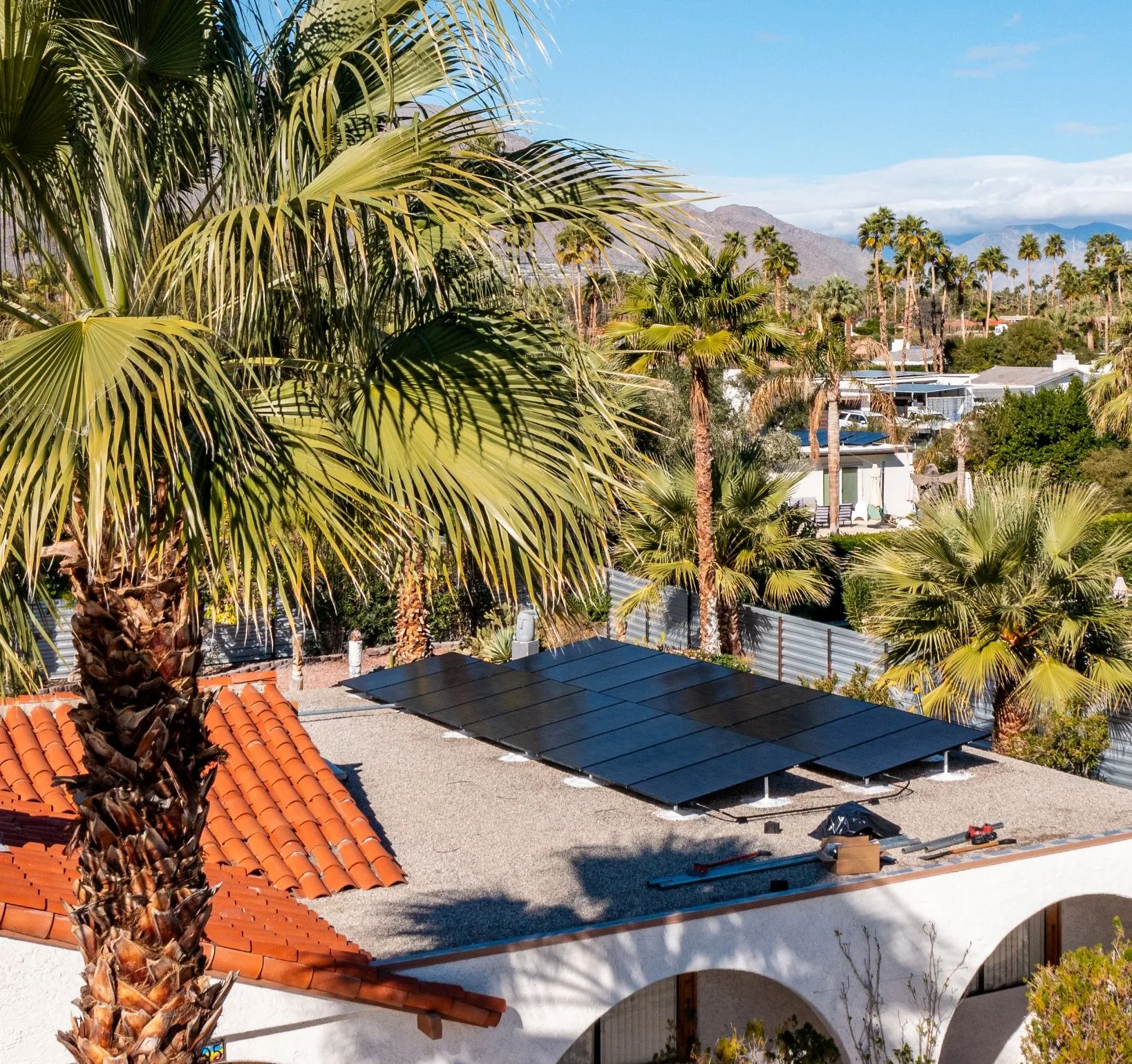
Our case studies show completed residential and commercial projects throughout the Coachella Valley. These examples demonstrate how system size, roof layout, and battery add-ons affect both a property’s appearance and the scope of the investment.
A solar quote is an all-inclusive figure based on your design, not just a sticker price for panels. Palm Desert’s strong sun and long cooling seasons support strong production, but many homes need a system sized for high seasonal air-conditioning use. We look at your usage first, then match the system to the roof, the electrical panel, and your backup-power goals.
The total covers:
Hardware, including panels, inverters, and mounting racks
Battery storage systems such as a Tesla Powerwall
System design, engineering, and city permits
Professional installation by our experienced team
Post-installation services, such as system monitoring
Several variables set the price of your solar panel system. We work with you to balance these factors so the design meets your energy goals and budget.
System size, measured in kilowatts (kW), is the largest cost driver and is set by your household’s electricity consumption. In Palm Desert, where air conditioning is essential for much of the year, energy needs are often higher than for a part-time residence. We size arrays based on your electric bills.
A larger home with greater usage needs more panels, more mounting hardware, and more labor; higher upfront cost, but greater long-term savings
A smaller system costs less up front and may leave more of your bill in place during peak summer months
If you plan to add an EV charger or a battery later, say so early so future loads shape the first design
Roof type changes labor and materials. A simple, south-facing composite shingle roof is the most straightforward to work on. Many Palm Desert homes use tile, and clay tile work is slower than composition tile work, with extra care required to protect the tiles and the underlayment.
Roofs with clay tiles, steep pitches, multiple small sections or planes, skylights, or limited south or west exposure add complexity and cost
Roof age matters: if the roof is near the end of its life, pairing solar with roof work is more practical than installing twice
Our team handles roofing and solar as connected decisions, including clay tile repair and full replacement when the roof cannot support a new array
Ground-mounted solar is an option when the roof is shaded, too small, unsuitable, or not a good structural fit, or when there is ample space
Ground mounts use extra racking and site work, which changes the price
Not all solar panels are equal. Panel brand, wattage, and inverter design all show up in the quote, and high-efficiency or higher-output modules can generate more power in a smaller space. That can offset a higher price per module on a tight roof.
We help you balance performance, warranty, and cost
Microinverter layouts can cost more than a single string inverter and can help when parts of the roof see different sun through the day
Battery storage is a separate cost; a Tesla Powerwall or another battery add-on raises the project total
Expansion packs, such as a Tesla Powerwall 3 expansion, add capacity after the first battery is in place
The Coachella Valley’s abundant sunshine is an asset for solar production. Intense summer heat can slightly reduce panel efficiency during the hottest hours, and dust plus monsoon residue lower output until the glass is cleaned. We design systems with equipment built for a desert climate.
Solar panel cleaning and maintenance are modest ongoing costs worth planning for
Pairing strong production with the right storage and rate strategy is how the investment holds up after install day
For homeowners in Palm Desert, going solar is about energy independence and control over rising electricity rates. A solar installation is custom-designed to match your family’s unique energy profile, whether the goal is to eliminate the electric bill or reduce it significantly. Two homes with the same square footage can still differ based on cooling habits and roof layout.
The quote is a bundle that may include:
Modules, inverters, racking, electrical work, permitting, and commissioning
A roof assessment, electrical panel upgrade, or battery storage
Battery backup for evening use and outages, such as a Tesla Powerwall
Roof repair or replacement before the array goes on
A car charger, including Enphase IQ EV Charger 2 installation when that is part of the plan
For businesses in the Coachella Valley, utility costs are a major operating expense that a commercial solar installation can dramatically reduce or eliminate. The scale is larger, with more panels and higher-capacity equipment, but the larger project can lower the cost per watt through economies of scale. A restaurant, office, or multi-unit property often has steadier daytime demand that aligns with solar production.
Return on investment is often compelling due to federal tax incentives, accelerated depreciation, and long-term energy savings
Roof condition, access, and interconnection rules can add time and cost
Some properties use roof arrays; others use ground-mounted solar with battery storage
Energy management, existing HVAC loads, and future expansion should be in the first design
Complete bids include engineering, switchgear, and utility coordination
Sunlogix has extensive experience with commercial HVAC, roofing, and solar projects, providing integrated solutions for local businesses
Incentives and rebates can substantially reduce the net cost of your solar installation. Two quotes are not comparable until someone runs the net math. Our team reviews solar incentives against current rules for your address and ownership model, and helps you apply for all available programs.
The Residential Clean Energy Credit, long known as the federal solar tax credit, is no longer available for new homeowner purchases. Under the 2025 federal budget law, it applies only to systems paid for on or before December 31, 2025. Homeowners who buy a system with cash or a loan today generally cannot claim it. Instead of a tax credit, we focus on the parts of the project you can still control: system size, battery storage, financing terms, and state and utility programs.
Commercial owners may still be able to claim the Clean Electricity Investment Credit (Section 48E), but eligibility now depends on strict deadlines and equipment sourcing rules. Depreciation benefits have also changed, so a commercial project should be reviewed by a tax professional before you decide.
While California has phased out some broader rebate programs, specific incentives remain, particularly for battery storage. Net billing under NEM 3.0 changed how exports are credited, which is one reason many homeowners price batteries with the panels. Programs like the Self-Generation Incentive Program (SGIP) can provide substantial rebates for installing a home battery.
State programs change; some apply to storage, some to specific building types
A current review beats an old blog figure
We stay current so our customers benefit fully
Local utility rules, permitting, net metering policies, and any city or regional programs should be checked at design time. Availability changes, and what applied to a neighbor last year may not apply to you this year. We handle interconnection agreements and map incentives to the actual equipment list, ensuring your system is set up for maximum benefit under current regulations such as NEM 3.0.
Depending on your utility provider, additional local programs may affect the financial return
A battery, a panel upgrade, or a new roof may follow different rules than the modules alone
The cost depends not only on equipment and installation, but also on how you pay. The same system can feel very different as a cash project, a loan, or a lease. Compare leasing vs buying before you lock in a structure.
A solar loan lets you own the system from day one and usually keeps you eligible for the federal tax credit and rebates. You make monthly payments set by term, rate, and down payment; once the loan is paid off, the energy your system produces is free. Ownership means you keep the system’s value over time and remain responsible for maintenance and monitoring.
Sunlogix offers attractive financing options through Sungage Financial, Energy Loan Network, and Fortifi
Promotions are not retroactive on projects already purchased and cannot be combined with other offers
In a solar lease or PPA, a third party owns and maintains the solar system on your roof. You pay a fixed monthly rate for the energy it produces, typically lower than your current utility rate, often with little to no upfront cost. You do not own the system, and the installer or financier often keeps the tax credit.
This option can limit your control if you want to add batteries, sell the home, or change the array later
Read term length, rate escalators, roof repair rules, and buyout language; those clauses affect true cost more than the first month’s payment
Paying for your system in cash provides the most straightforward path and the highest return on investment. You own the system outright, apply incentives you qualify for, and enjoy free electricity for decades with no loan interest, loan payments, or lease fees. The tradeoff is a larger amount due when the work is done.
Cash can pair well with a planned roof replacement because you control both timelines
The quality of your solar installer is just as important as the equipment you choose. Look for a licensed, insured, local company that operates in the Coachella Valley and has a proven track record of successful installations. Tile roofs, heat, dust, and high air-conditioning loads are normal here and should already be considered in the design process.
Sunlogix is a family-owned team based in Palm Desert that has recently undergone a grand expansion in the valley
We install solar, batteries, and related electrical work, and we also work on roofs and HVAC when those systems share the same house
We combine local expertise with the resources to handle any residential or commercial project designed for decades of reliable performance
So, how much do solar panels cost in Palm Desert, CA? The answer is unique to your property, usage, and goals. Solar is a sound financial investment for most homeowners and businesses in Palm Desert, offering protection against rising utility costs, energy independence, and predictable lower costs for years to come. Size the array to real bills, consider storage and roof work, compare net cost and ownership terms, and contact Sunlogix for a free, no-obligation quote.

About the Author
Sunlogix
Sunlogix is a family-owned Coachella Valley energy company delivering all-in-one solutions for AC, heating, solar, and roofing. Backed by decades of local experience, Sunlogix helps homeowners and businesses save energy, reduce costs, and stay comfortable year-round.