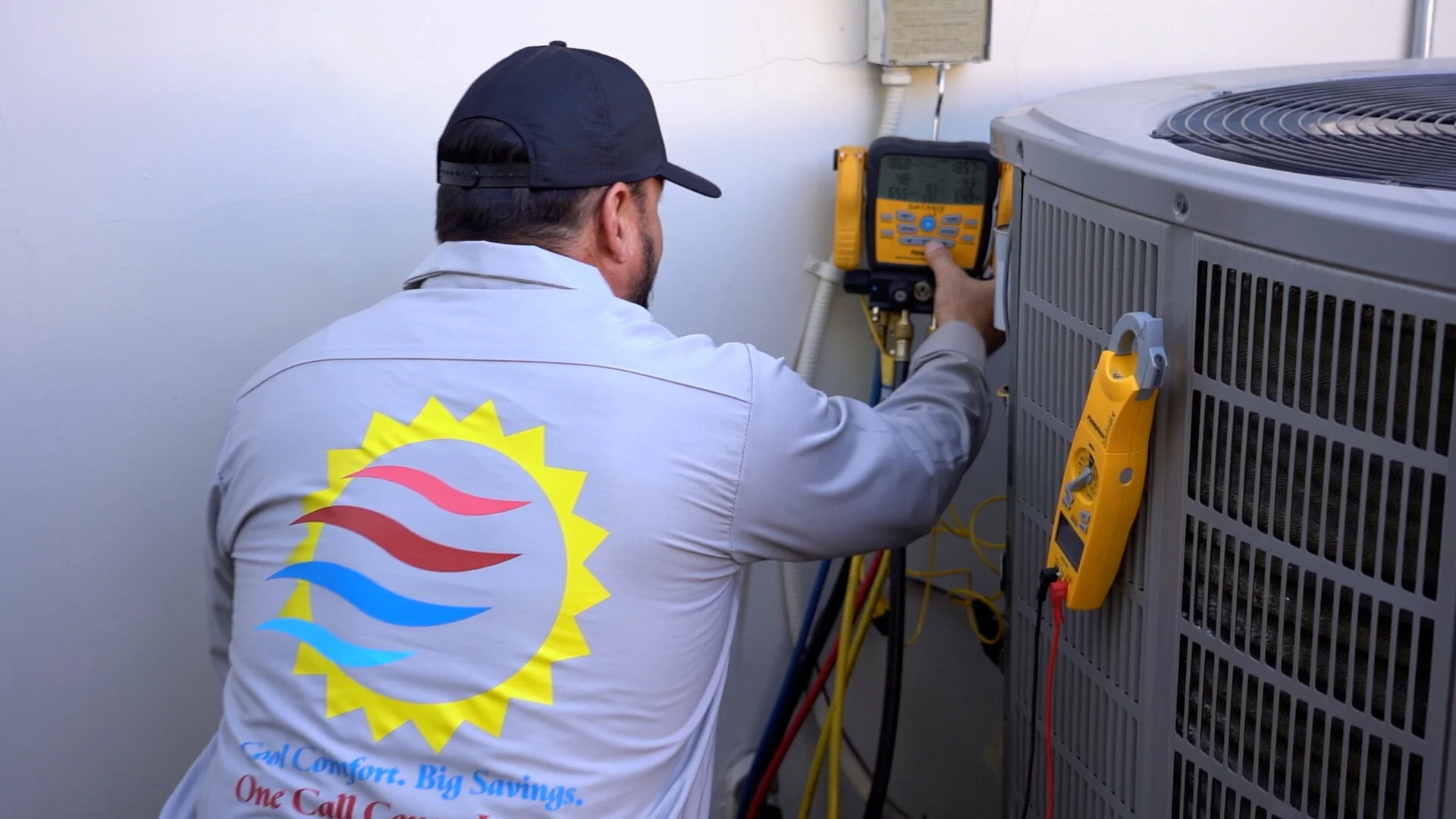
Sunlogix HVAC technician checking refrigerant pressures on an outdoor unit in Palm Desert

Are Ductless Mini-Splits a Good Choice for Palm Desert Homes?

Yes, ductless mini-splits are an excellent choice for many Palm Desert homes. Energy efficiency, zoned cooling, and quiet operation make them a strong fit for intense desert heat, room additions, hot spots, older homes without ducts, casitas, finished garages, and west-facing rooms. One outdoor unit can serve a single room or several zones, which matches how many Palm Desert houses are laid out.


See how we integrate HVAC and solar solutions into real homes across the Coachella Valley. These case studies show completed energy and comfort work in our desert communities, so you can review actual results before comparing equipment.

What Are Ductless Mini-Split Systems?

Ductless mini-splits, also known as ductless heat pumps, heat and cool without a network of attic or wall ducts. An outdoor unit connects to one or more indoor air handlers through a small conduit that carries refrigerant lines, power, communication wiring, and condensate. That design fits Palm Desert houses built without ducts and rooms that sit far from the main air handler.


Sunlogix has deep roots in the Coachella Valley and installs this equipment as part of our residential HVAC work. We offer:

  • Single-zone setups and multi-zone heat pump systems
  • A 3-zone ductless mini-split system for independent control in a living room, bedroom, and guest space
  • Indoor units that mount on a wall, at the ceiling, or low on a floor

How Mini-Splits Work

The system is split between an outdoor compressor and one or more indoor air handlers. An inverter compressor ramps up and down in speed instead of slamming on and off, which helps maintain a steady temperature in a closed-up desert house.

  • Outdoor unit: Pressurizes refrigerant that absorbs and releases heat as it changes between liquid and gas. In cooling mode, it expels indoor heat; in heating mode, it reverses, extracting heat from outdoor air.
  • Conduit: A small bundle of refrigerant tubing, a condensate drain line, and power and communication cables. Installation needs only a small three-inch hole through an exterior wall.
  • Indoor unit: A coil, a fan, and a filter. The fan blows room air across the coil and quietly distributes conditioned air. Each head has its own thermostat, remote, or phone app.

Traditional ducted systems can lose over 25% of their energy through leaks, holes, and poor connections. Mini-splits eliminate that waste by delivering air directly to the room.

Key Components of a Ductless System

A complete ductless system includes these core parts.

  • Outdoor compressor/condenser: Houses the compressor, condenser coil, and expansion valve. It sits on a pad or wall bracket, needs clear airflow and shade when possible, and must handle west sun and reflected heat from stucco and pavers. Modern units are compact, quiet, and built to withstand the elements.
  • Indoor air-handling unit(s): High-wall heads are the most common in local homes. Ceiling cassettes sit flush with the ceiling, and floor-mounted consoles work when wall space is tight. Each unit has its own filter and fan.
  • Refrigerant lines (line set): Insulated copper tubes that carry refrigerant between indoor and outdoor units through a small wall opening and along an exterior path.
  • Power cable and communication wire: Supply power to the indoor unit and maintain coordination between indoor and outdoor components. Some homes need a dedicated circuit; multi-zone systems may need a larger disconnect at the outdoor unit.
  • Condensate drain line: Removes moisture that forms on the indoor coil and routes it outside.
  • Controls: Handheld remotes, wall-mounted thermostats or pads, Wi-Fi adapters, and phone apps so each zone can run on its own setpoint.

Benefits of Ductless Mini-Splits in Palm Desert, CA

Air conditioning can account for a substantial share of energy use in a long Coachella Valley cooling season. Mini-splits earn their place when they cut wasted cooling, quiet the house, and keep dust out of the airstream.

Energy Efficiency and Cost Savings

Ducts in a hot attic can leak cooled air before it reaches the room, and Palm Desert attic temperatures can climb far above those in the living space. A ductless system delivers cooling directly into the room, which is a key reason efficiency improves when the right rooms go ductless.

  • Inverter-driven compressors adjust speed continuously to match demand instead of cycling fully on and off
  • More consistent indoor temperature
  • Zoning helps cool occupied rooms only – a closed-off guest casita does not need to run all afternoon
  • Lower monthly utility bills over the long desert summer

Zoned Cooling and Heating

One outdoor unit can serve several indoor heads, each with its own setpoint. Central systems treat rooms as one average; ductless systems do not, which fits west-facing glass, guest casitas, and rooms that take intense afternoon sun. Each area has its own demands:

  • The main living area needs more capacity than the rest of the house
  • A casita, pool house, or ADU should operate on its own
  • A kitchen requires more cooling because it picks up extra heat from cooking
  • A home office should stay comfortable by day while bedrooms wait until evening

You can shut a zone down when no one is in it, or run one zone overnight without forcing the whole house to the same temperature.

Quiet Operation

The compressor and condenser fan sit outdoors, so the major noise stays outside the living space. Indoor heads often run at a sound level similar to a soft whisper once the room is stable.

  • No loud roar from older central air or the constant hum of window units
  • No rush of air from a large supply grille and no furnace blower cycling in a closet
  • Practical for bedrooms, home offices, work calls, and sleep, especially with windows closed for months

Improved Indoor Air Quality

Indoor air can be more polluted than outdoor air, and leaky, dirty ductwork is often a major contributor. Ducts collect dust, pollen, dander, insulation fibers, and debris, then circulate those contaminants every time the system turns on.

  • Each indoor unit has a multi-stage, washable filtration system that captures airborne particles
  • No ducts means no path for contaminants to build up and spread room to room
  • Provides a noticeable difference for allergies, asthma, or other respiratory sensitivities
  • Air quality and purification options alongside HVAC work when a home needs more than the standard head filter

Comparing Ductless Mini-Splits to Traditional HVAC Systems

Central air conditioning remains a strong fit for many whole-house jobs. Ductless is not a replacement for every floor plan. The comparison below is about how the two approaches differ in a typical Palm Desert house.

Installation Differences

Installing a traditional ducted HVAC system is a major construction project. It needs supply and return ducts, a furnace or air handler, a matching outdoor condenser, and large openings in the walls, floors, and ceilings.

  • A ductless install needs an outdoor location, a line-set route, a drain path, and a mounting spot for each head
  • Technicians drill a small three-inch hole rather than opening long stretches of ceiling
  • A single-zone system can often be installed in a few hours; a multi-zone system typically takes a day or two
  • Multi-zone jobs must respect manufacturer limits on line-set length, elevation changes, and number of heads

Some homes use both: a central system for the core and a mini-split for a hot room or detached space.

Maintenance Requirements

Both systems need regular care. Neglect in this climate shows up fast because equipment runs so many hours.

  • Central systems: Change the central filter every 1–3 months. Annual tune-ups cover coils, refrigerant, electrical parts such as capacitors and contactors, and duct inspection for leaks.
  • Ductless systems: Remove and wash indoor filters monthly, or more often if pets or fine dust are present. Keep the outdoor coil clear of leaves, sand, debris, and shrubs.
  • Annual professional service: Deep cleaning of indoor and outdoor coils, refrigerant charge, electrical connections, drain lines, and peak-performance checks.
  • Independent zones: If one head has a problem, other zones can still run. A clogged condensate drain can stain a wall; a dirty outdoor coil raises head pressure on a 110-degree afternoon.

We offer comprehensive AC & Heating Maintenance/Repair plans to keep your system in top condition.

Flexibility in Home Design

Because they do not require ductwork, mini-splits are well-suited to buildings where ductwork is impractical. That includes older homes with solid brick or stone, homes with cathedral ceilings, and open floor plans where clean lines matter.

  • Indoor styles range from standard wall units to discreet ceiling cassettes
  • Condition a converted garage or kitchen addition without a new trunk line or a resized furnace
  • Add a zone later if the outdoor unit and line-set rules allow it
  • Place heads for a clear throw of air – not directly onto a bed or favorite chair, not behind drapes, and not dictating furniture around a large floor grille

Are Ductless Mini-Splits a Good Choice for Palm Desert Homes? Climate Considerations

Yes. Palm Desert summers are long, dry, and extremely hot; winters are mild; humidity can rise during monsoon season. Modern ductless technology is built for cooling-dominated homes and still heats on cool nights, often excelling where older systems struggle.

Performance in High Temperatures

High-efficiency ductless mini-splits are engineered to perform when outdoor temperatures soar well above 100°F, even with air already above 110°F. Inverter compressors can run at a low, consistent speed for long periods instead of cycling at full power.

  • Capacity still drops as outdoor temperature rises, so sizing cannot be based on a mild spring afternoon
  • We look at glass, orientation, insulation, and how the room is used
  • Shade and clearance help: a unit on a north wall outperforms one in full western sun, and hot discharge air that recirculates into the intake cuts performance
  • Heat pump operation in winter is usually straightforward in Palm Desert; overnight lows are not like mountain climates, though rooms with lots of glass need a closer look at both heating and cooling capacity

Humidity Control Capabilities

Palm Desert air is dry most of the year, so humidity is not the main comfort issue as it is on the coast. Mini-splits still dehumidify well: warm, moist air passes over the cold evaporator coil, water vapor condenses, and moisture is drained away.

  • Inverter units that run longer at low speeds have more time to remove humidity than a constantly cycling, oversized central unit
  • That matters during monsoon season and rare humid spells
  • An oversized unit in shoulder seasons can cool the air too fast and shut off before it dehumidifies

Ideal Applications for Ductless Systems in Palm Desert, CA Homes

The versatility of ductless mini-splits makes them a natural fit for many Coachella Valley floor plans. Some layouts gain more from ductless than others.

Room Additions and Renovations

A dedicated mini-split is often the easiest, most efficient way to heat and cool a new space. Tapping into the existing central system can be complicated and expensive, and it may require upgrading the entire system and installing new ductwork. Here are the main applications of mini-split systems:

  • Sunrooms, home offices, and extra bedrooms
  • Kitchen expansions, closed-in patios, and new primary suites
  • The addition runs on its own schedule without stretching the original furnace or air handler

Older Homes Without Ductwork

Many charming older homes in Palm Desert and nearby valley communities were built around wall units, evaporative coolers, or limited duct runs – long before central air was common. Retrofitting full ducts can mean ceiling demolition, a large air handler, and a loss of architectural character.

  • Ductless systems add high-efficiency cooling and heating without tearing apart walls and ceilings
  • A multi-zone system can cover living areas and bedrooms with indoor heads and one or two outdoor units
  • Line sets follow exterior walls, so interior disruption stays smaller than a full duct retrofit
  • Older windows, single-pane glass, and weak insulation still affect the load; envelope upgrades and the HVAC layout should be planned together when the house is leaky

Supplementing Existing HVAC Systems

Even with a functioning central system, many homes have hot spots or cold spots the main unit cannot fix. A ductless head in that room is often a cleaner answer than replacing the entire central system. Common applications include:

  • A west-facing master bedroom that bakes in afternoon sun
  • A garage converted into a workshop or gym
  • A guest casita or pool house
  • A media room that generates equipment heat
  • A sun-soaked dining room

This hybrid layout also helps when you want backup in a critical room. If the central system is down, a ductless zone can still keep a bedroom or office livable while repairs happen.

Potential Drawbacks to Consider

Ductless systems have many benefits, but they are not invisible and not automatic. Honest planning up front prevents frustration later.

Initial Installation Considerations

The upfront investment can be higher than a window unit or a replacement central system when ductwork is already in place. Treat it as a long-term investment: energy savings over the system’s life often offset the higher initial cost.

  • Cost depends on how many indoor units you need, how far line sets must run, and whether the electrical panel can support the outdoor equipment
  • A single head on a short path is a different job than a three-zone heat pump with long line sets and a new circuit
  • Block walls, two-story runs, and tile roofs change how crews route and cover lines
  • Outdoor placement may need a pad, wall brackets, or extra line-hide to meet HOA rules

A full evaluation should map every head, penetration, and drain. When you receive a quote, make sure you understand everything it includes.

Aesthetic Considerations

Indoor air handlers are visible. Modern units are sleek, but a wall-mounted head is still a rectangle with a louvered face on the wall, ceiling, or floor.

  • Ceiling cassettes that sit flush with the ceiling are a more discreet option
  • Some homeowners prefer a unit high in a corner; others want the hidden vents of a central system
  • Uncovered insulated lines on a front elevation may look unfinished; covers and routing help keep the look tidy
  • Outdoor units should not dominate a courtyard or block a walkway
  • Color and bulk vary by model, so we review placement in the actual room, not only on a floor plan

System Sizing and Placement

A ductless system only performs as well as it is designed and installed. Proper sizing and placement are critical, and this is not a DIY project.

  • A unit that is too small will struggle; a unit that is too large will short-cycle, waste energy, and fail to dehumidify
  • We calculate load by room and do not copy the tonnage from an old window unit
  • Air should wash across the room, not dump onto one seat; the head needs space to pull return air and for service access
  • Multi-zone outdoor units have a maximum number of indoor units and a total capacity limit – you cannot keep adding heads forever
  • Future rooms, such as a casita or gym, should be part of the first design
  • Refrigerant line length and height have limits; a detached studio at the back of a deep lot may need its own outdoor unit

Professional Installation and Maintenance in Palm Desert, CA

Professional installation and ongoing maintenance are non-negotiable. Charge, vacuum, drain pitch, and electrical protection decide whether the system lasts through desert summers.

Choosing a Qualified Installer

Choose a company that designs and installs ductless systems as a regular part of residential HVAC, not as a rare add-on. Our climate presents unique challenges, and an experienced contractor will know how to size and install a system for intense summer heat.

  • Sunlogix understands local building codes and the demands of desert homes
  • We perform detailed load calculations for optimal performance and efficiency
  • We handle mini-split unit installation, multi-zone heat pump layouts, and the service work that follows
  • We work from our Palm Desert location and serve surrounding communities
  • We offer authorized equipment lines and proper matching of indoor and outdoor units; mixed, unmatched parts can void manufacturer protection and perform poorly at high outdoor temperatures

Ask how the installer will size each zone, where the condensate will go, and how the line set will be covered. Those answers tell you whether the job has been thought through.

Maintenance Tips for Longevity

A little routine care keeps a ductless system running smoothly for years.

  • Clean the filters: Wash indoor filters every 4–6 weeks (a monthly cadence is reliable), and more often during dusty months or if you have pets. Rinse with water, let them dry completely, then reinstall.
  • Keep units clear: Do not block the indoor head with furniture or tall art. Keep the outdoor unit free of leaves, sand, plant debris, and other vegetation to maintain open airflow.
  • Rinse the outdoor coil gently: Power off first. Do not crush the fins with a high-pressure blast.
  • Watch the drain: If you see water on the wall below a head, stop the unit and have the drain cleared. Algae and dust can clog a line that looked fine in spring.
  • Schedule annual professional maintenance: A technician checks coils, refrigerant, electrical components that fail in heat, and fan motors before a peak week. We provide AC and heating maintenance and repair, as well as new ductless installations.

Do not run the unit for long periods with a packed filter. If you add solar later, efficient HVAC still reduces the load your panels need to cover. Comfort equipment and power production work should be planned together for the same house and not in isolation.

Conclusion: Are Ductless Mini-Splits a Good Choice for Palm Desert Homes?

For many homeowners, the answer is yes – especially for additions, older homes without ducts, hot problem rooms, and households that want true zone control in a long cooling season. Mini-splits deliver cooling straight to the space, run quietly, and avoid attic duct losses that waste energy in desert heat.


They are a weaker fit when you need one invisible system for a tightly ducted whole house, or when you do not want to see an indoor head. Right sizing, honest placement, and steady filter care decide whether the system feels like a natural part of the home.


A professionally installed ductless mini-split is a practical investment in comfort through peak summer and the mild winter nights that follow.


Check Our Services

Sunlogix logo with yellow sun and flowing red and blue ribbons on dark circle

About the Author

Sunlogix

Sunlogix is a family-owned Coachella Valley energy company delivering all-in-one solutions for AC, heating, solar, and roofing. Backed by decades of local experience, Sunlogix helps homeowners and businesses save energy, reduce costs, and stay comfortable year-round.


Great Prices,
Made Greater!
Sunlogix logo with yellow sun and flowing red and blue ribbons on dark circle
By SunLogix
October 13, 2026