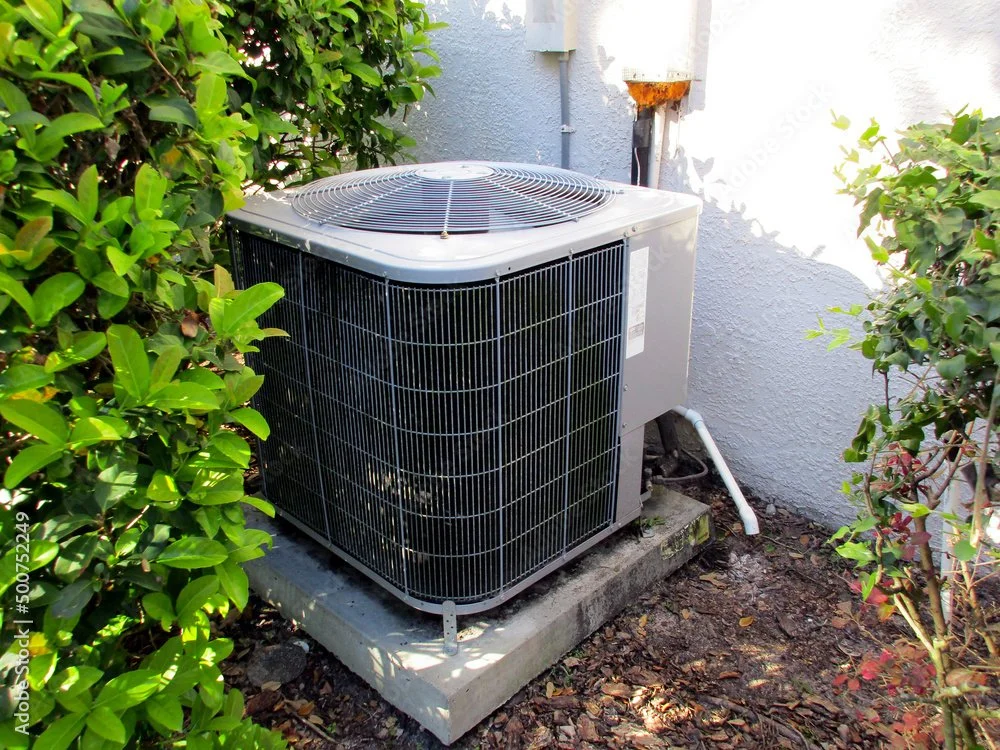
If you are deciding between American Standard and Carrier AC, the choice usually comes down to value versus premium features: Carrier is often the cheaper option and is commonly used in high-volume tract homes. This brand also has a top-tier ultra-high SEER efficiency line. American Standard is known for old-school mechanical durability, strong reliability, and resistance to environmental wear.
Your AC system can account for nearly half of your home’s energy use, so brand, size, and installation all matter. Sunlogix is an authorized dealer for American Standard and also handles heating, solar, and roofing as one project.
Both brands build full residential lines, from basic single-stage units to high-efficiency variable-speed systems. A correctly installed mid-tier unit will beat a poorly installed premium unit in this climate.
American Standard is often more expensive but far more reliable than Carrier. Most people in the Palm Desert area are buying mid-SEER units, choosing American Standard.
Noise, parts, and warranty are closer than the ads suggest. Installation quality and maintenance often decide how the system feels.
Local support matters as much as the logo.
Carrier is owned by Carrier Global. American Standard is owned by Trane Technologies and is a sister brand to Trane, sold through a different dealer channel. That is why you will see different model names, communicating thermostats, and parts catalogs.
Price position. Carrier’s top lines are frequently quoted higher. American Standard often delivers comparable capacity and efficiency at a lower cost.
Feature packaging. Carrier pushes branded innovations such as Greenspeed®. American Standard packages tighter temperature control and better airflow in a more straightforward lineup.
Philosophy. Carrier is the industry innovator for efficiency and smart-home integration. American Standard focuses on rugged construction and systems built to last decades with minimal fuss.
Dealer access. Sunlogix is an authorized American Standard dealer, so homeowners here get local installation and service – not just a catalog comparison.
Matching equipment. Outdoor unit, indoor coil or air handler, and thermostat must be a matched system. Mixing leftover parts from an old unit can erase efficiency gains.
Those differences matter more in Palm Desert, CA than on the coast. Long cooling seasons reward efficiency. Dust, heat, and long run times reward simple service access and a brand your local tech can support quickly.
Both companies sell good, better, and premium tiers. The compressor type, blower motor, and controls determine how the system actually runs.
Carrier has built a reputation on engineering and sits at the forefront of HVAC technology. That shows up most clearly at the top of its lineup.
Greenspeed® Intelligence lets variable-speed compressors and fans adapt output in tiny increments to match the load. On a 110-degree afternoon it can run harder; on a mild evening it can loaf along.
Extremely high efficiency, superior humidity control, and very quiet operation
Communicating thermostats, including the Infinity Touch Control
Multi-stage or variable compressors and quieter outdoor cabinets on higher tiers
Those extras add cost and more electronics to diagnose later
Infinity® Series: Top of the line, SEER ratings up to 26, Greenspeed Intelligence, and a premium price tag.
Performance™ Series: Balance of efficiency and value, with single-stage and two-stage models. A popular choice without Infinity cost.
Comfort™ Series: Most budget-friendly line. Reliable, efficient, and built to meet modern energy standards.
Exact sticker prices change with tonnage, coil, air handler, ducts, and electrical. Treat any “starting at” number online with caution – the installed price is the only number that matters.
The advanced technology in the Infinity series comes at a significant price. Proprietary communicating parts can cost more to replace, and installation and repairs must be handled by highly trained technicians familiar with the brand.
Leaky ducts, a weak return, or skipped maintenance will erase the brochure promise. In a hot, dusty climate, complex electronics also need clean power and regular service.
Choose Carrier if you want the highest possible efficiency and the latest smart-home controls. It requires a budget for matching indoor equipment and a dealer who will stand behind that lineup.
American Standard has earned its reputation for rugged durability over decades. As an authorized dealer, we’ve seen these units withstand the Palm Desert heat year after year.
Spine Fin™ Coil: All-aluminum outdoor coil with superior heat transfer and better corrosion resistance than traditional coils
AccuClean® Air Filtration: Removes up to 99.98% of airborne particles – a strong option for indoor air quality
Multi-stage or variable compressors on higher models for steadier temperatures
High-efficiency blower motors that move air with less wattage
Comfort-focused airflow for longer, quieter cycles and even cooling room to room
Communicating controls on select matched systems
That steadier airflow is what people feel in a single-story ranch or a two-story home with a hot upstairs.
Platinum Series: Variable-speed compressors and up to 22 SEER, with exceptional comfort and humidity control.
Gold Series: The brand’s most popular line. Two-stage cooling, strong performance, and solid value.
Silver Series: Reliable single-stage cooling that meets or exceeds government efficiency standards. Durable and cost-effective.
Top SEER ratings do not quite reach Carrier’s most advanced models. American Standard focuses more on core performance than the latest smart gadgets, and it is not the brand if you are set on Carrier’s specific thermostat family.
Some homeowners want the Carrier name as a resale talking point, even when the hardware is similar. No brand will fix major duct leaks or a badly shaded outdoor pad on its own.
Choose American Standard when you want rock-solid reliability, durable construction, a clear efficiency step-up, and a brand your local authorized dealer stocks and services. For most Palm Desert replacements, that mix of performance and price is the practical answer.
The final price depends on equipment, home size, and installation complexity. Labor, electrical, duct sealing, permits, and thermostat choice change the total.
Tonnage must match the house – not the neighbor’s unit and not the old cabinet on the pad. An oversized system short-cycles. An undersized system never catches up in July. A load calculation should drive the size.
A 2-ton system is typical for a smaller home (around 1,000–1,300 sq. ft.), casitas, or tighter newer envelopes. Mid-tier equipment from either brand lands in a similar range; Carrier’s Infinity series will be noticeably higher.
The installed job is higher than equipment-only because it includes removal, refrigerant, pad or curb work, startup, and testing. Use a site visit, not an online average.
A 3-ton system is common for mid-sized homes (around 1,600–1,900 sq. ft.) and larger single-family houses. Equipment costs for American Standard Gold and Carrier Performance stay competitive, with a significant jump for the highest-end models.
The jump from 2-ton to 3-ton is not just 50% more metal – it is more refrigerant circuit capacity and often a larger indoor coil. Breaker, disconnect, and line-set work can step up too. If someone tries to sell 4 tons “to be safe” without a load calc, ask why.
Installation quality has a greater impact on performance and lifespan than the brand name on the unit. Do not cut corners here.
Recovery of old refrigerant, hauling the old condensing unit, and setting the new one
Connecting line sets, matching the indoor coil, charging to spec, and verifying airflow
Extra work for attic coils, old fiberboard ducts, or undersized returns – that is what lets a new unit hit its rating
Factory-trained technicians who install American Standard to manufacturer specifications and protect the warranty
Sunlogix offers new AC and heating installation, replacements, diagnostics, tune-ups, heat pumps, and ductless mini-splits. Free HVAC inspections help you see whether you need a repair, a tune-up, or a full changeout before you pick a brand.
Both Carrier and American Standard frequently offer rebates on high-efficiency systems. Federal tax credits and local utility incentives can also lower net cost.
Rebates follow efficiency ratings and system type, not the logo
Heat pumps sometimes unlock extra incentives compared with a straight air conditioner
Pairing a new HVAC system with solar can cut use and offset what remains
California incentive rules change, so check the current program list at quote time
Look beyond the upfront price. Over 15 to 20 years, you pay for the installed system, electricity every summer, filters, coils, tune-ups, occasional repairs, and the next replacement if the first unit is neglected.
A higher-efficiency unit may cost more initially but can save thousands on electricity, especially in a hot climate
Efficient equipment can cut HVAC energy use by about 20–40% compared with older models
A cheaper, inefficient unit can lose by month 36 when the utility bill stays high
A premium Carrier that is never maintained can lose when a control board fails
If value is defined as the lowest purchase price, entry-level models from both brands are competitive.
If value means advanced tech and the highest possible efficiency, Carrier’s Infinity line may be your choice.
If value means a balance of strong performance, incredible durability, and a reasonable price, many homeowners find American Standard offers the long-term value.
Value is comfort per dollar over the life of the system – not the lowest bid.
The key metric is Seasonal Energy Efficiency Ratio (SEER), plus the newer SEER2 test method. A higher number means greater efficiency. HSPF matters if you are looking at heat pumps. The rating on the yellow label is what counts, not the adjective in the brochure.
Carrier’s Infinity 26 Air Conditioner with Greenspeed can achieve a SEER rating of up to 26. Entry Carrier units sit closer to the federal minimum. Buying Carrier does not automatically mean you bought a high-SEER machine – you have to specify the tier.
American Standard’s most efficient model, the Platinum 20, offers a SEER rating of up to 22. The Gold and Silver series also provide excellent efficiency in their classes. A properly installed Gold- or Platinum-style system can compete with Carrier’s mid- and upper-line systems on operating costs.
In a 2,000 sq. ft. Palm Desert home, upgrading from an old 10 SEER unit to a new 18 SEER American Standard system could save hundreds of dollars per year. Exact dollars depend on insulation, window load, thermostat habits, time-of-use rates, and whether the system is a heat pump or a straight AC.
An old, low-SEER unit will cost more every month it runs
Two homes with the same floor plan can post very different bills if one has leaky ducts and a dirty coil
A smart thermostat helps only if setpoints and schedules are realistic
Pairing a high-efficiency unit with a Sunlogix solar installation can reduce or even eliminate that portion of the electricity bill
Both brands have invested heavily in quiet operation. Carrier’s quietest Infinity model can run at 51 decibels. American Standard’s quietest Platinum model runs as low as 54 decibels – comparable to a quiet rainfall.
Premium outdoor units from both brands are quieter than builder-grade single-stage condensers
Variable-speed fans ramping slowly are easier on patio conversations than a unit that slams on at 100%
Indoor noise is often the blower and the ducts, not the brand
A rattling return grille or an undersized return will make any system sound rough
This is where American Standard truly shines. The brand consistently ranks at the top of consumer reports and contractor surveys for reliability, owner satisfaction, and lowest frequency of repairs.
With regular maintenance, a quality central AC often runs 10 to 15 years, and some last longer
Heat, dust, and skipped filter changes shorten that
Reliability tracks correct refrigerant charge, clean coils, adequate airflow, stable electrical supply, and annual tune-ups
Carrier also produces reliable systems, but American Standard has made durability its core identity
A strong warranty provides peace of mind and protects your investment. Warranties protect parts. They do not replace maintenance, and they do not cover every labor fee unless that is written in.
Carrier offers a 10-year parts limited warranty on most residential systems when the unit is registered within 90 days of installation. If not registered, the warranty defaults to a 5-year term.
Longer coverage often requires a matched unit. Labor coverage, if any, is often a dealer add-on. Always read the current certificate.
American Standard also provides a 10-year registered limited warranty on parts. The system must be registered in a timely manner to receive the full term. Some higher-tier compressors carry longer coverage than the rest of the parts list.
As an authorized dealer, Sunlogix handles this registration process so customers receive the full benefits. The certificate in your job folder is the document that counts.
The base warranties are very similar and strong within the industry. Both stress professional installation, timely registration, and proof of maintenance.
Know what is parts-only versus parts-and-labor
A warranty part still needs a tech who can get it, install it, and charge the system correctly
An authorized American Standard dealer already works in that parts stream
Independent reviews and surveys are a good indicator of long-term performance. Reviews for both brands swing with the installer more than with the factory.
Carrier generally receives positive reviews, particularly for the Infinity series. Customers praise quiet operation, even temperatures, and the advanced comfort control of the Infinity Touch Control thermostat.
Complaints usually involve high repair invoices on proprietary boards or a system that was oversized. The pattern is familiar: great hardware, uneven install.
American Standard consistently earns top marks for customer satisfaction and reliability. Homeowners frequently comment on durability, years of trouble-free operation, even comfort, and a price that did not feel inflated.
Complaints, when they appear, also cluster around installation and maintenance – not a unique factory defect pattern. People who can get same-week local service stay happier than people who bought an orphaned brand.
At Sunlogix, our deep experience with American Standard systems in the demanding Palm Desert climate gives us confidence in recommending them to our neighbors. We can help you design a complete home energy solution, pairing a high-efficiency American Standard AC with solar to maximize comfort and savings.
American Standard vs Carrier AC is a value-versus-premium decision. Carrier leads with flagship technology and a higher typical price. American Standard delivers the comfort, durability, and efficiency most homes need at a more grounded installed cost.
In this desert climate, sizing, ductwork, maintenance, and a local authorized dealer determine how either system feels during the hottest week of the year. If you are ready to compare a real proposal to the unit you have now, start with an inspection and a load-based quote rather than a brand name alone.

About the Author
Sunlogix
Sunlogix is a family-owned Coachella Valley energy company delivering all-in-one solutions for AC, heating, solar, and roofing. Backed by decades of local experience, Sunlogix helps homeowners and businesses save energy, reduce costs, and stay comfortable year-round.